Someone Registered a Business Name Like Mine — What Can I Do?
What your options actually are when another company registers a name close to yours — who has priority, what a state registration does and doesn't give you, and how to find out before it becomes expensive.
You're searching for something else entirely, and there it is. A company with a name close enough to yours that your stomach drops. Same word, different spelling. Or the exact word, different state.
First reaction is always the same: wait, can they do that?
Here's the answer, and it's the thing almost nobody knows: in the US, trademark rights come from use, not registration. Whoever used the name in commerce first usually has the stronger claim, regardless of who filed paperwork first.
That one fact changes this whole situation. Registering an LLC in Delaware does not give you a trademark. Filing an application does not automatically beat someone quietly selling under that name since 2019. And finding a similar registration does not mean you have to rebrand.
So before you panic, work out where you actually stand.
1. Figure out what kind of registration it is
Three completely different things get called "registering a name."
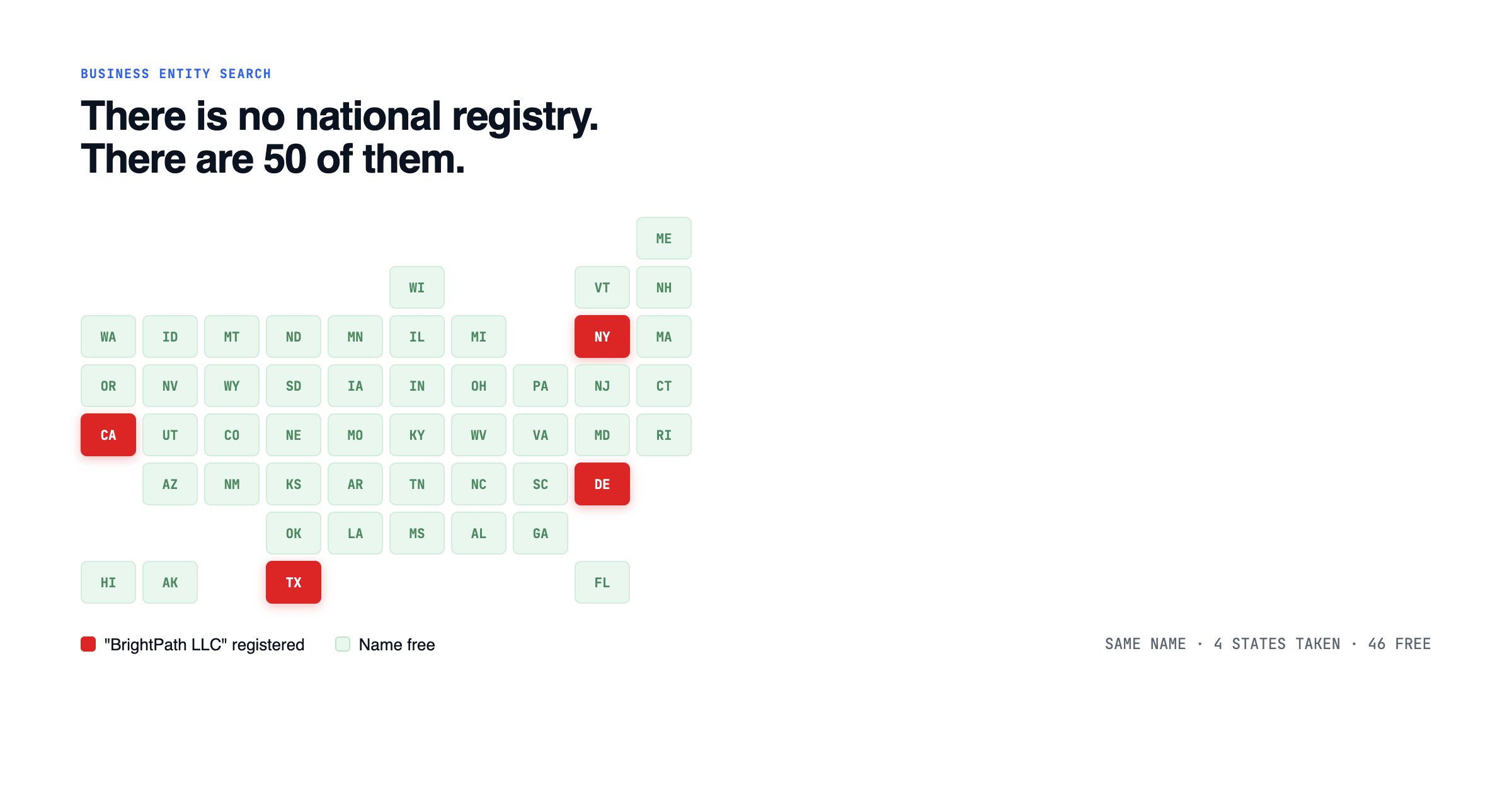
A state entity registration — an LLC or corporation — is the weakest. It reserves the name for filing purposes in one state. No trademark rights. Doesn't stop anyone in another state. Doesn't stop a company with a federal mark from making you change. Two businesses can hold the same LLC name in different states, legally, forever.
A federal trademark with the USPTO is the strong one. Nationwide rights in the classes it covers, and everyone is on notice whether they looked or not.
Common-law use is the one people forget. A business using a name in commerce has enforceable rights in its area with no registration anywhere. And here's the part that should bother you: those rights leave no record you can search. You cannot find them. They can still cost you your name.
A state LLC filing that happens to match you is a very different problem from a live federal mark in your class. Find out which one you're looking at before you do anything else.
2. Work out whether it actually conflicts
A similar name isn't automatically a problem. The test is whether a customer would be confused about who they're buying from.
Industry matters most. Trademarks live in 45 classes. An identical name in an unrelated class often isn't a conflict at all. That's how Delta the airline, Delta the faucet company, and Delta the dental insurer all exist at the same time without anyone suing anyone.
Similarity is broader than you think. Spelling, sound, meaning, overall impression. "Kwik" and "Quick" are a conflict. "Sunbeam" and "Sun Ray" might be.
This is where I see founders get it wrong constantly. They search their exact name, find nothing, and declare victory. The mark that blocks you is almost never the identical one. It's the close one.
3. Establish your own priority
If it is a real conflict, this comes down to dates.
Go find proof of when you first used the name in commerce. First invoice. First sale. First ad. The archived version of your site. First press mention. Dated, public, specific.
That's what priority is built on, and it settles most of these before anybody files anything.
If you were first, you have real standing. If they were, you want to know that now — not after you've printed the packaging.
What you can actually do about it
They've filed but not registered yet. There's a window. When an application is published for opposition, you get 30 days to oppose it. Then it closes and it does not reopen. That's the only deadline in this whole area with no second chance — which is exactly why finding out in week one beats finding out in month three.
You have earlier use. You may be able to coexist, or establish that your rights came first. This is where you pay a trademark attorney. The analysis is genuinely fact-specific and being wrong is expensive in both directions.
They were clearly first, clearly in your class. Rebrand now. I know that's not what you want to hear. But the cost of a name change compounds every month you keep building on it, and I'd rather tell you that at month two than month twenty.
It's an LLC in another state, in a different industry. Often the answer is: nothing. Not every similar name is a problem. Don't burn a month on it.
The part that actually bothers me
Every version of this story starts the same way. The founder finds out months later, by accident.
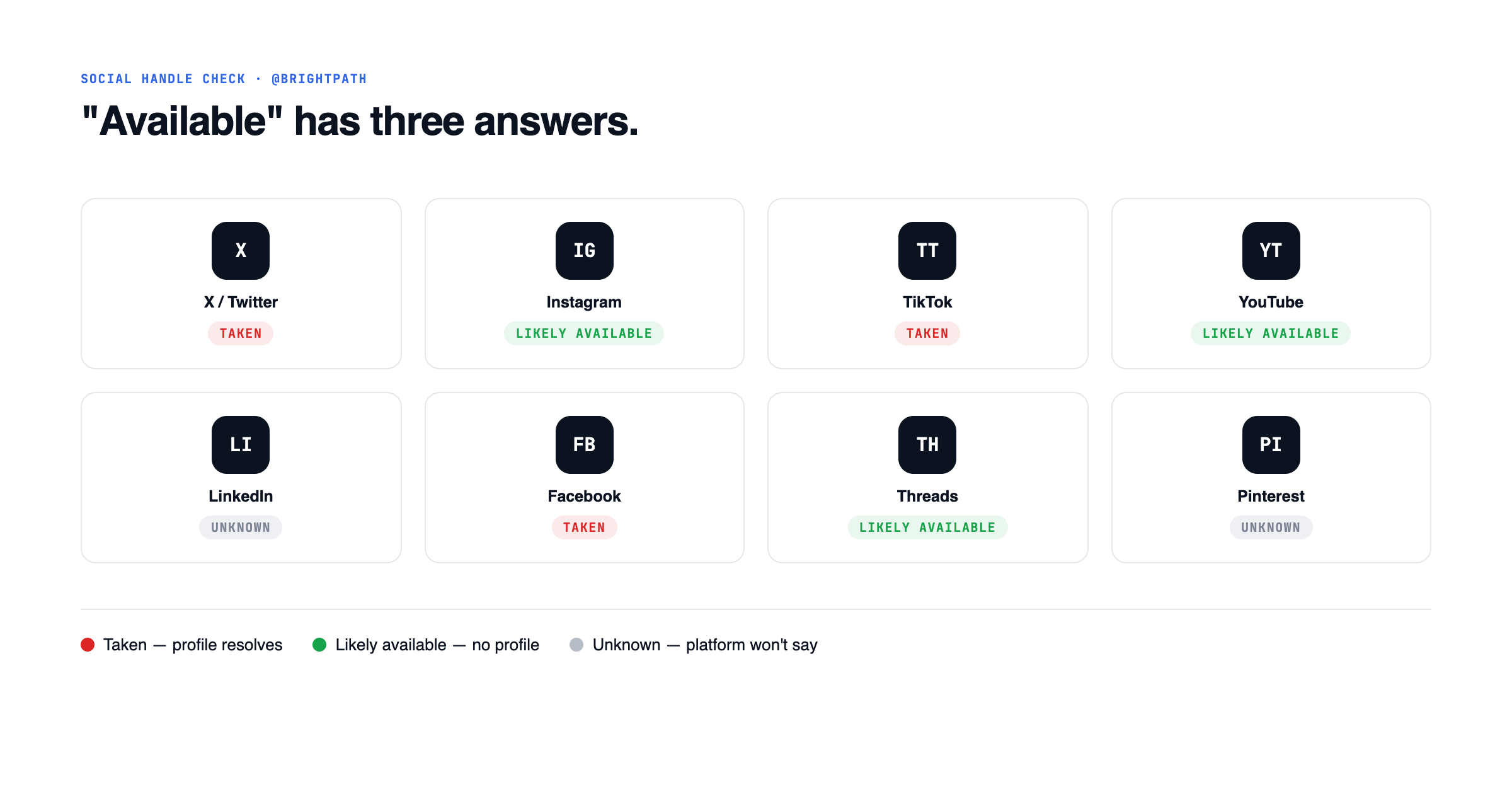
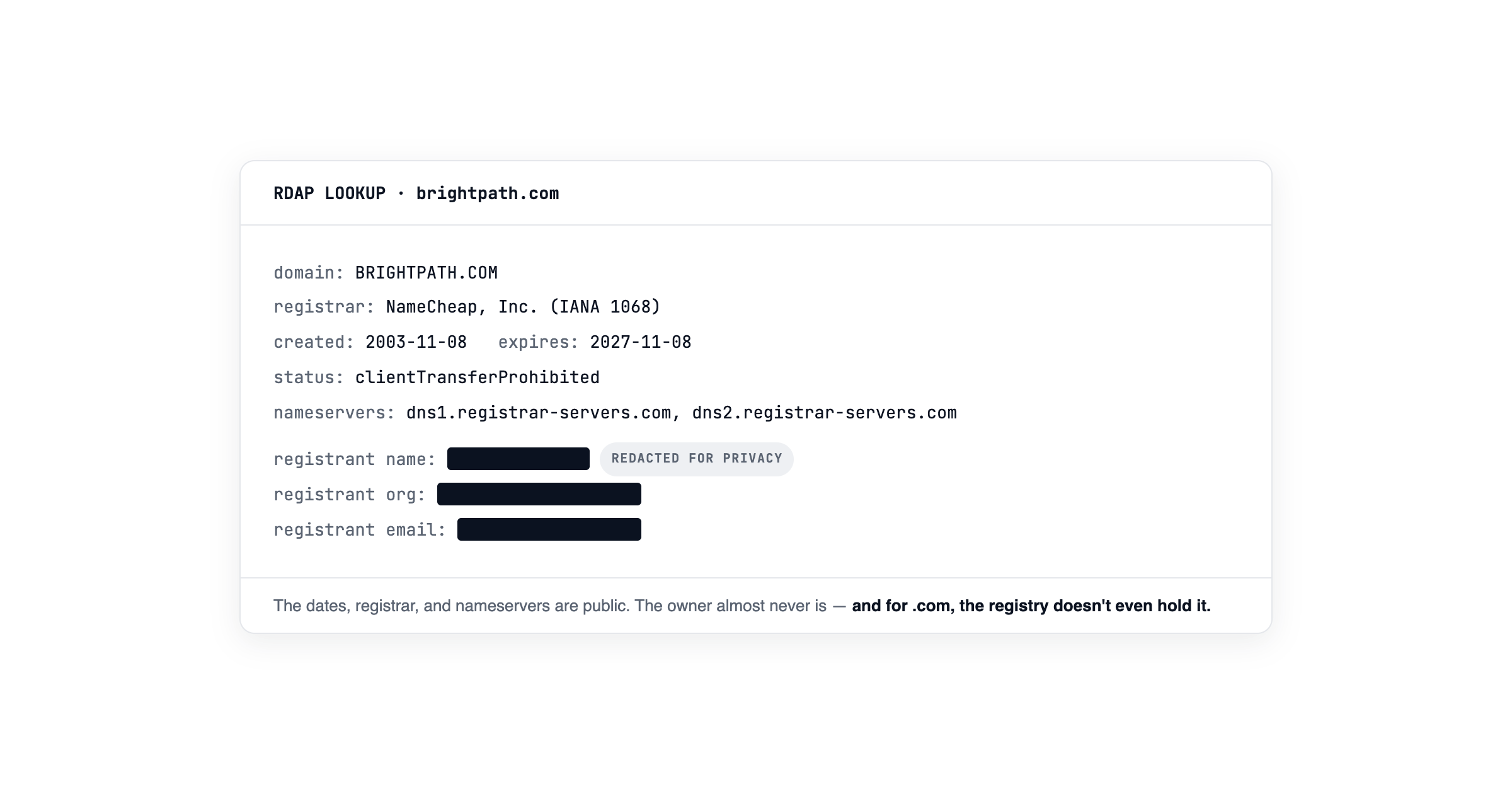
New filings are public the day they're made. So are domain registrations, entity filings, handle claims. The information is sitting there. Nobody's watching it.
And screening your name once — the day you picked it — tells you exactly nothing about what happens the following Tuesday.
I ran our own product on our own name a few weeks ago and found out that brandscreen.com was sitting with a company that had stopped operating — and outranking us for our own brand. We bought it. That's a domain, not a trademark, but it's the same lesson: I only knew because something was actually checking.
That's the whole reason we built Brand Protect. It re-checks your name every week and emails you when something moves — a new filing in your class, a domain registration, an entity that conflicts.
If you just want to know where you stand right now, run a report — trademarks, domains, entities, handles, in one place.
The check you ran once is already out of date.
Good luck out there.
BrandScreen is a screening tool, not a law firm. Nothing here is legal advice — if you've got a real conflict, go talk to a trademark attorney.