Naming Guides
Naming guides are practical, step-by-step playbooks for choosing a startup or product name you can actually own — covering how to brainstorm candidates, test them for meaning and memorability, and screen each one for trademark conflicts, domain availability, business-entity collisions, and social handles before you commit. Every guide below is written to take you from a blank page to a defensible, register-ready brand name.
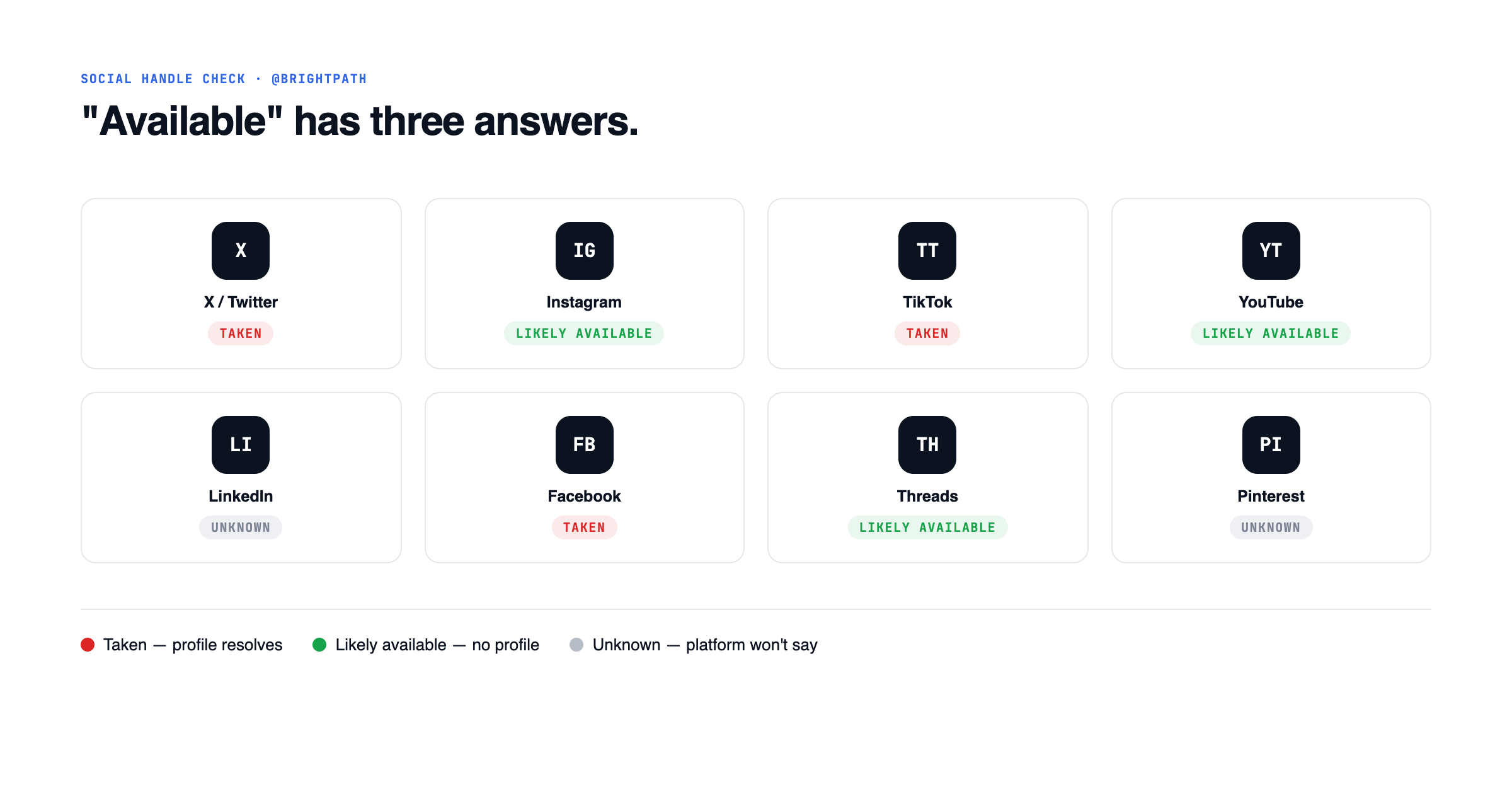
How to check if a brand name is available on social media
Checking eight platforms by hand is tedious and the results are less definitive than they look. What available actually means per platform, and what to do when a handle is taken.
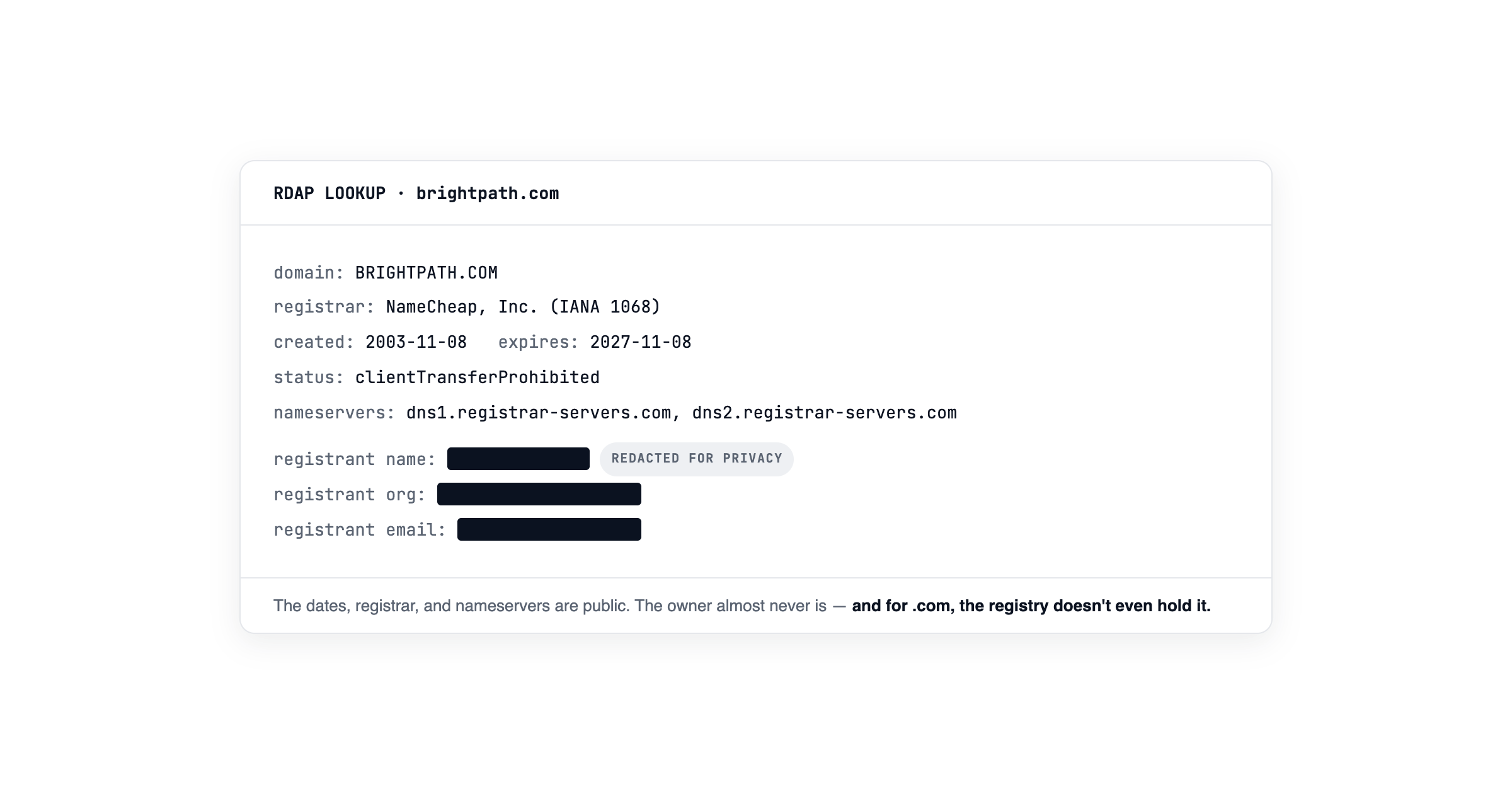
How to find out who owns a domain
WHOIS privacy hides most registrants, but the record still tells you plenty. When it was registered, when it expires, who the registrar is, and whether it might become available.
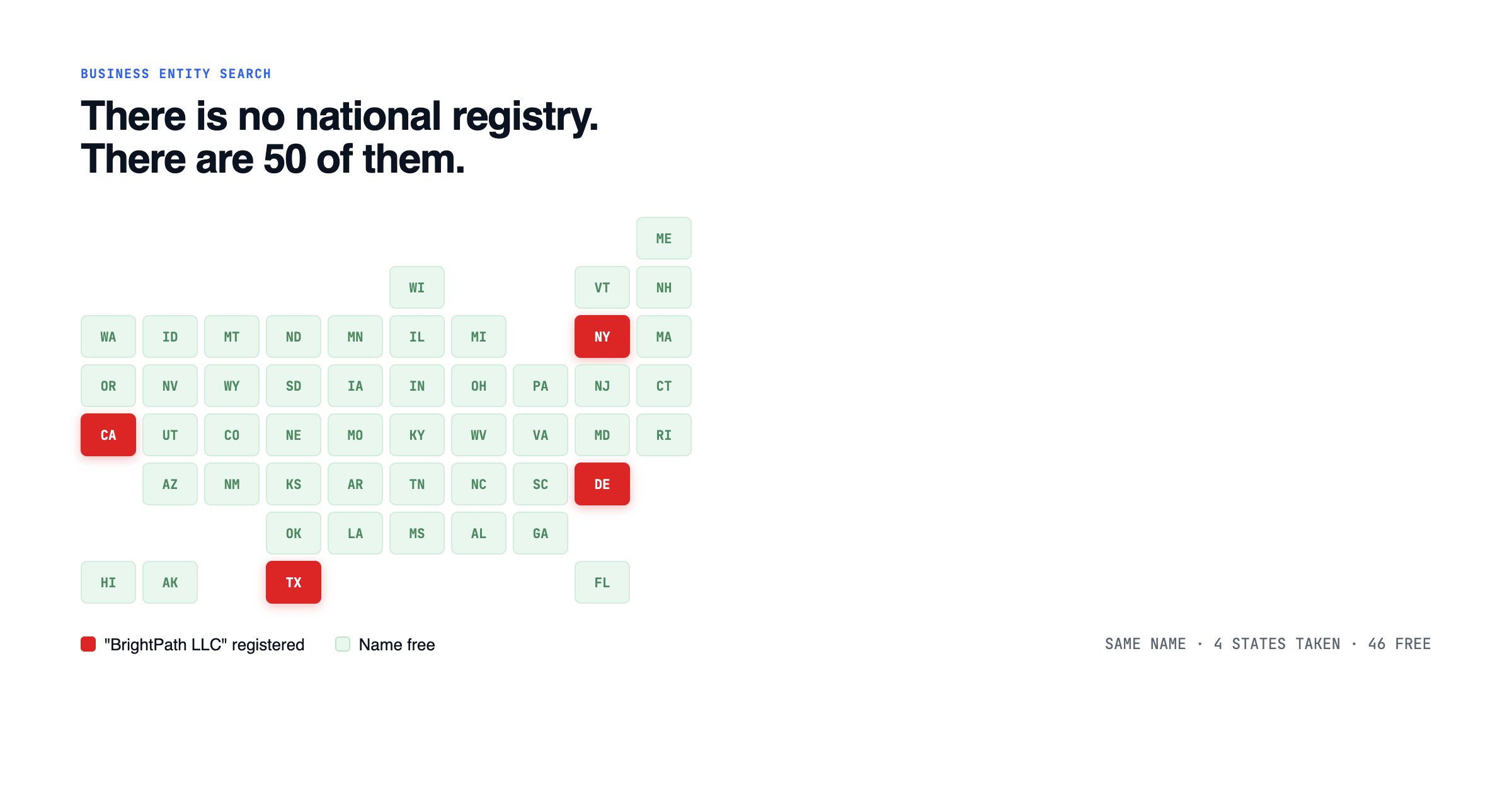
How to check if a business name is already registered
A business name can be registered in one state and free in another. How to check, what a match actually blocks, and where the search stops being useful.
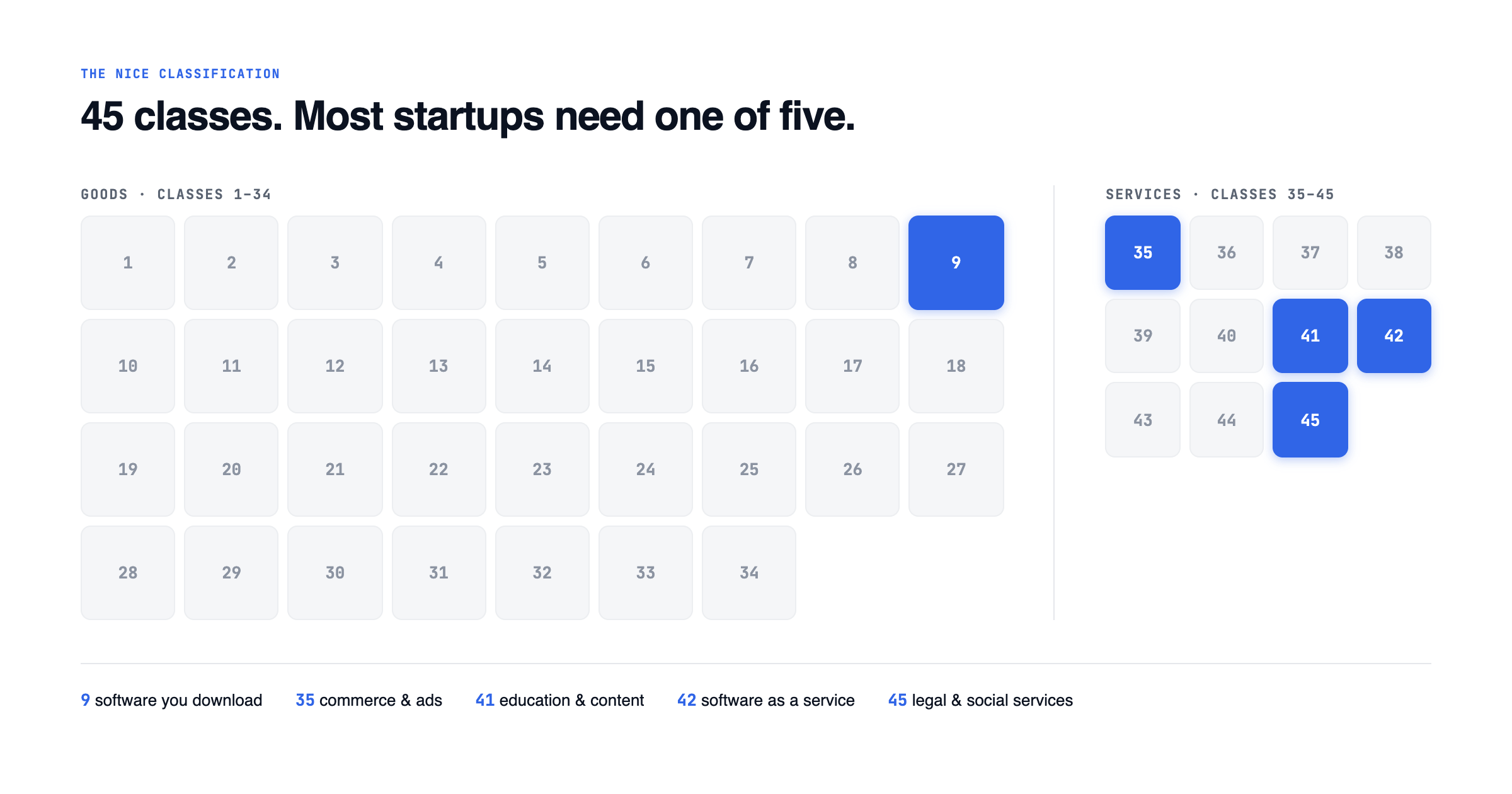
What trademark class does my business need?
There are 45 classes and picking wrong is expensive to fix. How classes work, which ones software and consumer businesses land in, and why the goods description matters more than the number.
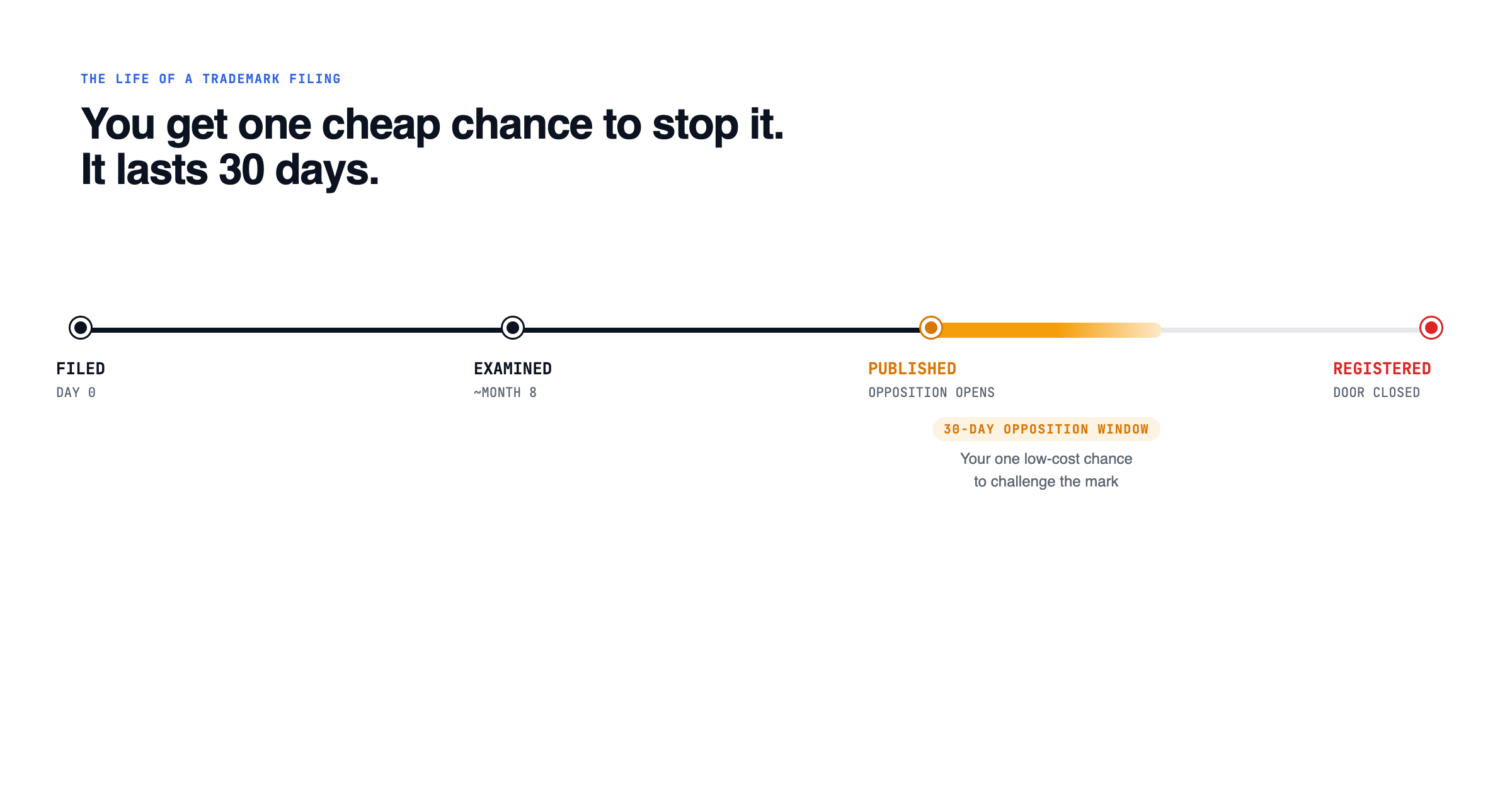
Someone filed a trademark on your brand name. Here's the clock you're on.
The opposition window is 30 days from publication and it does not reopen. How the timeline works, what your options are at each stage, and why finding out late costs more.
Someone Registered a Business Name Like Mine — What Can I Do?
What your options actually are when another company registers a name close to yours — who has priority, what a state registration does and doesn't give you, and how to find out before it becomes expensive.
Your business name is already taken. Now what?
A taken business name isn't one problem, it's five. How to check trademarks, entities, domains, handles, and search, and what your real options are for each.
How many names get claimed every single day?
Every day about 15,400 U.S. businesses register, 2,100 trademarks are filed, 33,000 domains are registered, and 800,000 social handles are created. Check your name before it's gone.
How to Check If a Name Is Trademarked (USPTO Search, Explained)
A step-by-step guide to running a real USPTO trademark search — what to look for, the mistakes that get founders in trouble, and the fast way to check everything at once.
How to Come Up With a Business Name (a Process That Actually Works)
A practical process for naming a startup or business: seven naming patterns with real examples, how to generate a real shortlist, and the screening step most founders skip.
What Is a Brand Score?
A Brand Score is a 0–100 rating of how ownable a brand name is, based on trademark conflicts, domains, business entities, social handles, and search competition. Here's how to read one.
Do I Need to Trademark My Business Name?
Whether you need to trademark your business name, what a trademark actually protects, and how to check for conflicts before you file — explained in plain terms.
How to Name a Startup: A Step-by-Step Guide
A practical, step-by-step guide to naming your startup — from generating ideas to checking that the name is actually available across trademarks, domains, and more.
How to Check If a Business Name Is Already Taken
A step-by-step guide to checking whether your business name is available across trademarks, domains, business registrations, and social media — before you commit.