Someone filed a trademark on your brand name. Here's the clock you're on.
The opposition window is 30 days from publication and it does not reopen. How the timeline works, what your options are at each stage, and why finding out late costs more.
Someone filed a trademark on your brand name. Here's the clock you're on.
Most trademark problems are recoverable. This one has a deadline, and the deadline is short.
When someone applies to register a mark that conflicts with yours, there's a window where you can object cheaply and directly. After it closes your options get slower, more expensive, and harder to win.
The window is 30 days.
The timeline
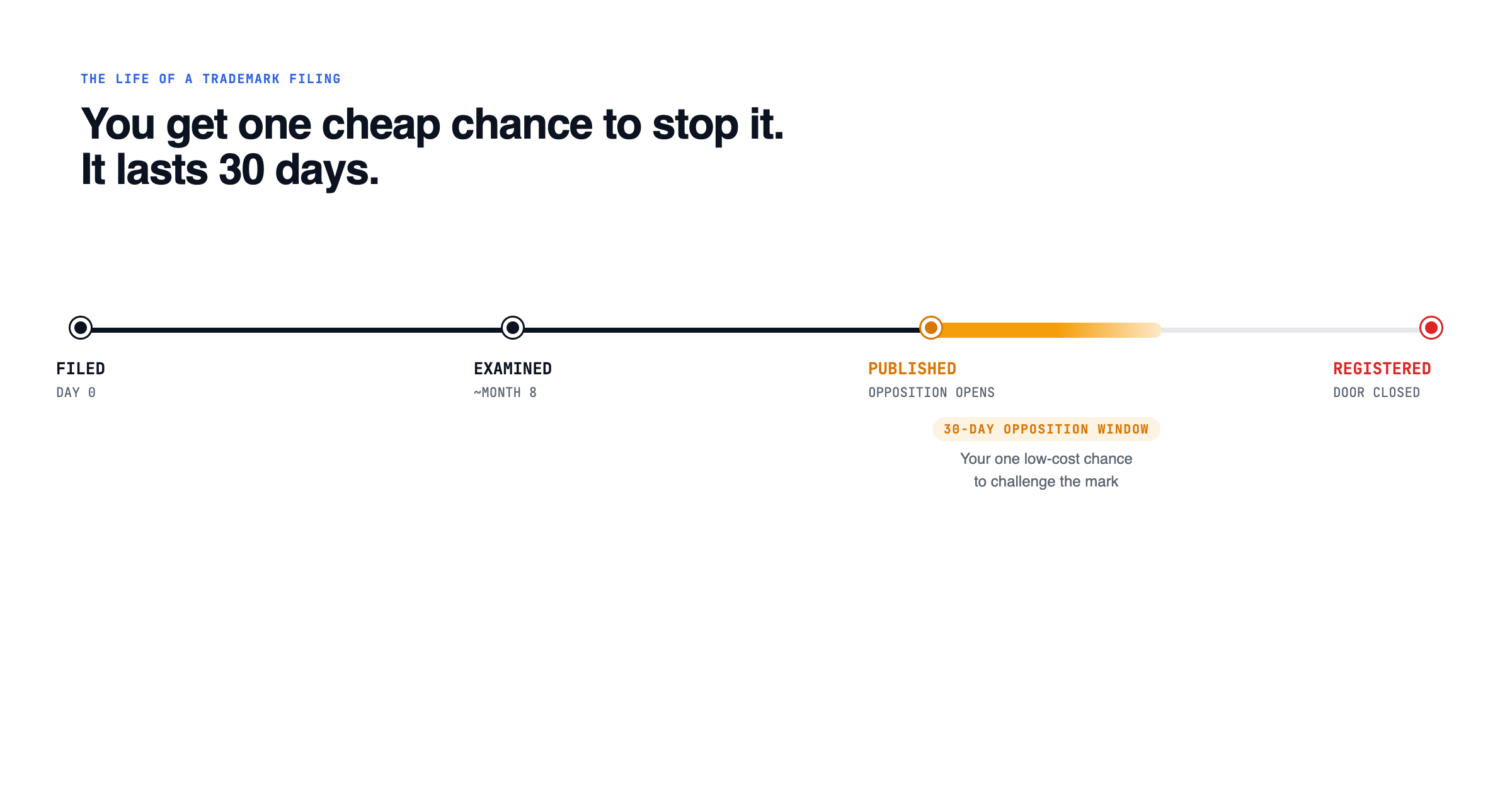
A US trademark application moves through four stages.
Filed. The application enters the USPTO system. It's public and searchable almost immediately. Nothing has been examined yet.
Examined. An examining attorney reviews it, usually several months later. They search for conflicting marks and may refuse registration, often citing likelihood of confusion with an existing mark.
Published for opposition. If it survives examination, the mark publishes in the Official Gazette. That starts a 30-day clock. Anyone who believes they'd be damaged by the registration can file an opposition.
Registered. Nobody opposes, the applicant finishes what's left, the mark registers.
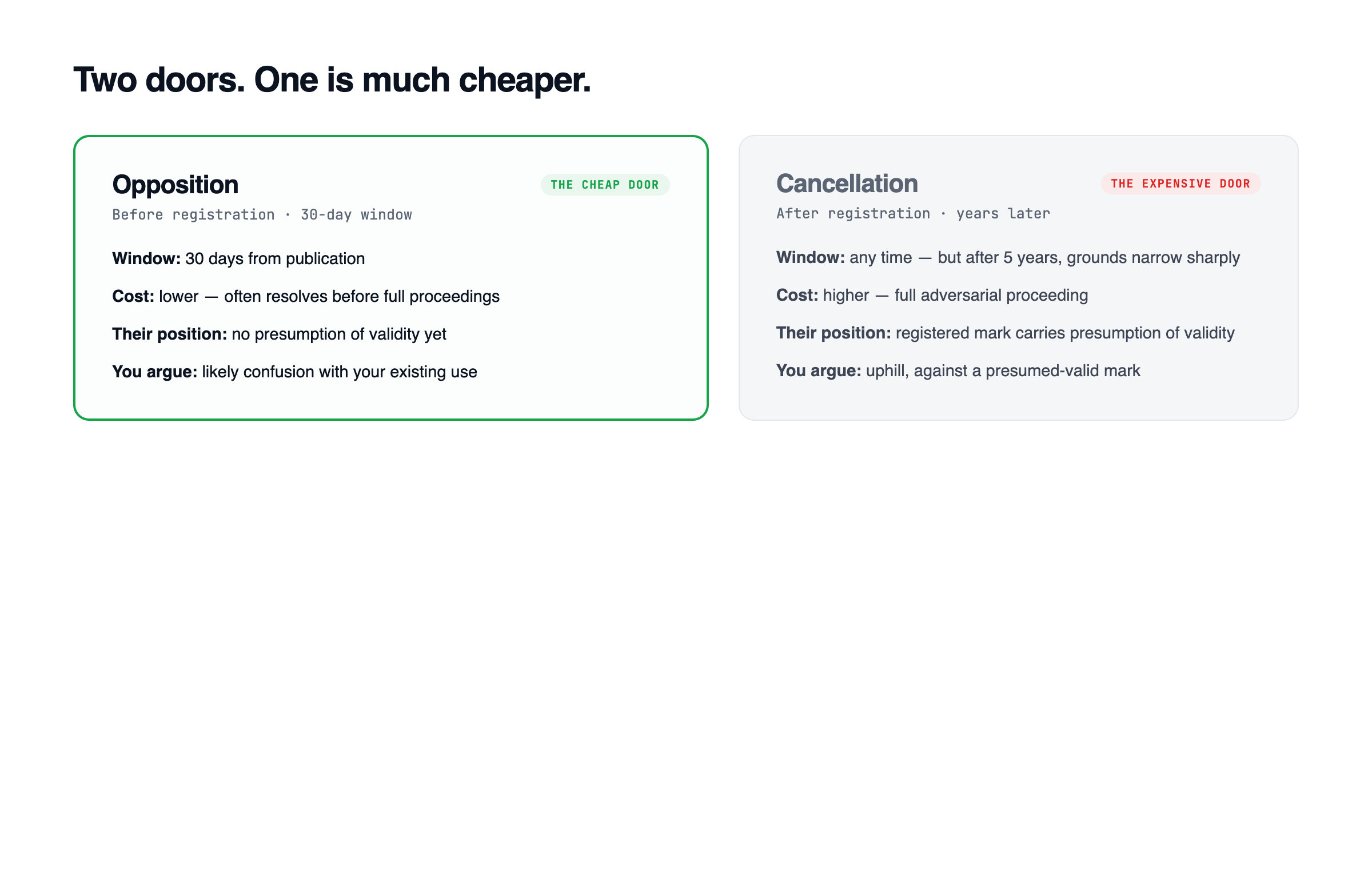
The opposition window is the cheap moment. Before publication there's nothing to oppose. After registration you're in a cancellation proceeding, which is heavier.
Your options during the window
File a notice of opposition with the Trademark Trial and Appeal Board. This is a real proceeding with pleadings, discovery, and a schedule. It's adversarial. It's also the most direct tool available and it exists for exactly this.
Request an extension. You can file for a 30-day extension of time to oppose. It's granted routinely and it buys you time to get advice. Usually the right first move if you find out on day 25.
Do nothing, on purpose. Not every conflicting filing is worth opposing. A mark in an unrelated class, for a different business, in a market you'll never touch, may not be worth what a proceeding costs. That's a call for a trademark attorney, not a gut decision.
What changes after it closes
Once the mark registers, your route is a petition to cancel, also at the TTAB.
Cancellation is available for five years on most grounds. After five years the grounds narrow a lot. So the door doesn't slam at registration. It gets heavier to push, and then heavier again.
The real difference is cost and posture. During opposition you're stopping a right from existing. After registration you're taking one away from someone who's been relying on it, possibly for years, and who now has a presumption of validity on their side.
Sooner is stronger. That's the whole shape of it.
You don't need a registration to object
Founders assume they have no standing if they never filed anything. Not true.
In the US, trademark rights come from use in commerce, not from registration. If you've been trading under a name you may have common-law rights in the markets where you operate, and those rights can support an opposition against someone who filed later.
Registration makes those rights stronger, broader, and much easier to enforce. But unregistered doesn't mean unprotected, and it doesn't mean you have to watch a competitor register your name without saying anything.
Evidence is what an opposition rests on. First use dates, sales records, marketing materials, anything establishing when and where you were using the name. Gather it before the clock is running, not during.
The actual problem is finding out
None of the above is obscure. Applications are public. The Official Gazette publishes weekly. The TTAB rules are online.
The problem is nobody tells you. There's no email when a conflicting mark publishes. If you aren't watching the register, you find out when a customer mentions it, or when you get a cease-and-desist, or when you file your own application and get refused because someone else's registration is now in the way.
By then the 30 days closed months ago.
That's why trademark watching exists as a category. Someone has to check the register for you, because the register will never check in with you.
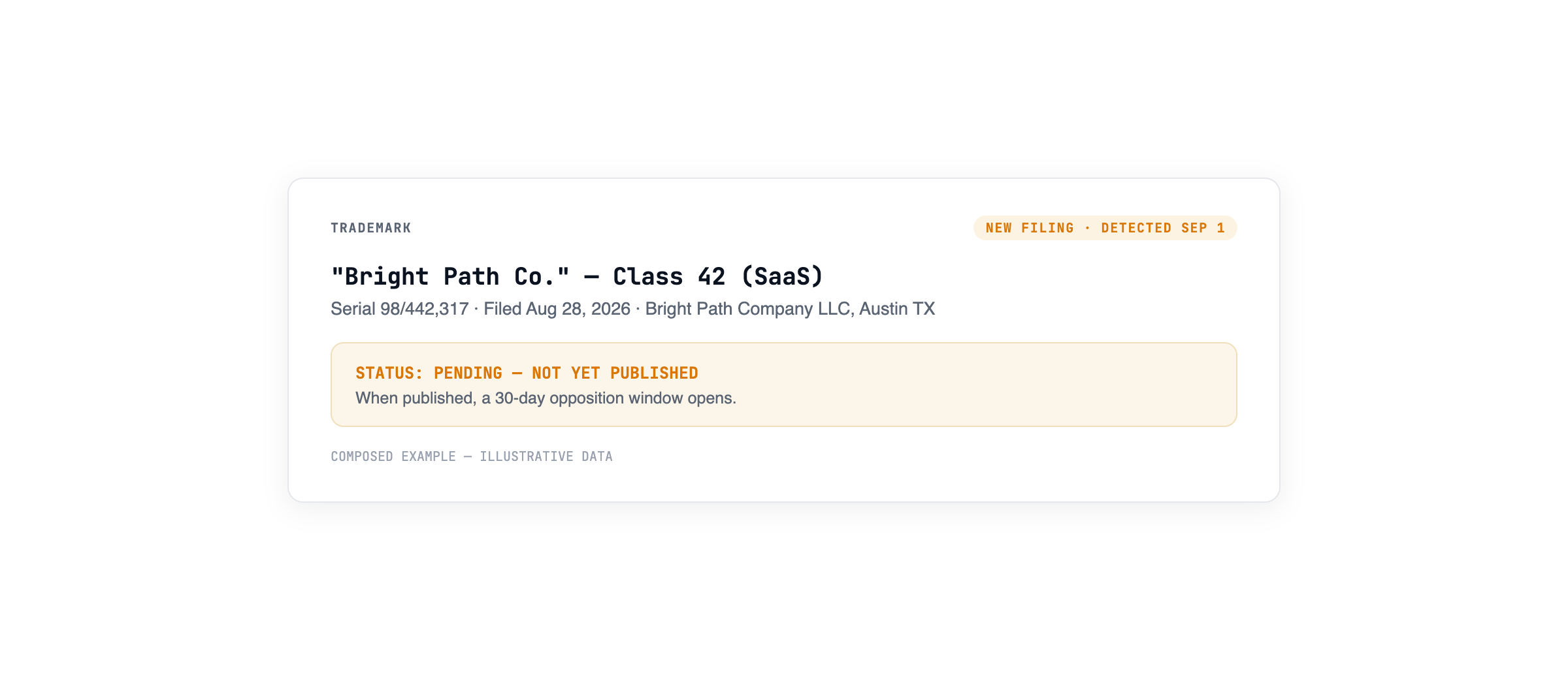
BrandScreen Protect checks the USPTO register weekly for marks matching or resembling your name and emails you when something changes. New filing, status transition, registration. Five names for $49 a month.
One more thing
This describes how the process works. It isn't legal advice and it doesn't replace a trademark attorney. Oppositions are adversarial proceedings with real deadlines and real costs on both sides.
If a conflicting mark has published against your name, get advice. Don't read another article.
The one thing worth doing right now, before advice: check the publication date. Everything else depends on how much of the 30 days is left.
Related: How to check if a name is trademarked · What trademark class does my business need?
Watching for exactly this is what Brand Protect does — it checks the register weekly and tells you the week a filing appears, not months later.